
Critical Cybersecurity Leadership Book Review: Building Credibility and Influence in the CISO’s First 100 Days

Stepping into a senior leadership role comes with a quiet pressure that starts ticking almost immediately. If you’ve ever felt that countdown, “The First 100 Days of the New CISO” will probably hit closer to home than you expect. JC Gaillard doesn’t sell big promises or dramatic turnaround stories. There are no miracle frameworks or “do this and win” checklists. What he offers instead is something far more useful; a steady, realistic voice for a moment in a career that’s often tense, political, and unforgiving.
At its heart, the book makes a simple but important point: the first 100 days aren’t about fixing cybersecurity. They’re about earning the right to lead it. Gaillard shifts the focus away from pure technical authority and toward credibility, trust, and judgment. That shift alone makes the book stand out. Anyone expecting a deeply technical playbook will quickly realize this is about people and influence first and tools second.
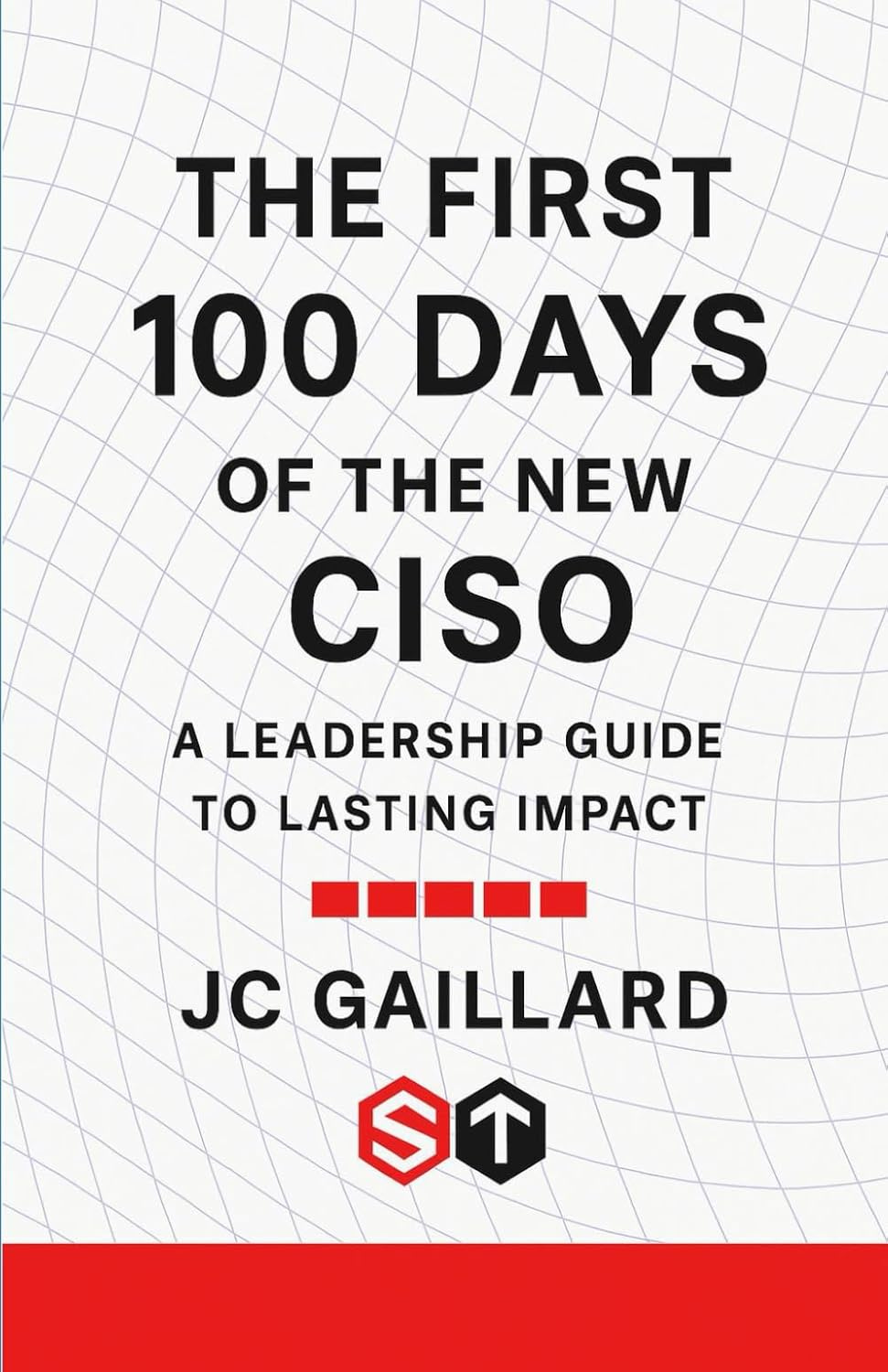
One of the strongest aspects of the book is its structure. The “6–6–6 framework” (six days, six weeks, six months) gives the early CISO journey a realistic rhythm. The emphasis is on listening before acting and understanding before changing anything. It sounds obvious on paper, but Gaillard adds depth by grounding each phase in real organizational friction- internal politics, cultural resistance, unclear expectations. These are the realities CISOs deal with every day, yet they’re rarely addressed this directly.
Gaillard’s writing feels calm and assured, like advice from someone who’s already made the mistakes and doesn’t need to impress anyone anymore. There’s very little jargon and almost no hype. The pacing is intentionally slow, mirroring the mindset he’s advocating. He pushes back against the glorification of constant “firefighting” and instead encourages discipline, governance, and long-term thinking- even when that’s harder to sell internally.
Rather than developing characters, the book develops identity. Gaillard paints the modern CISO as a connector- someone operating across boardrooms, business units, and technical teams at the same time. The message is clear: real cybersecurity maturity comes from culture and governance, not just better tools or bigger budgets.
While the book is especially relevant for new or first-time CISOs, it doesn’t stop there. CIOs, risk leaders, and even board members would benefit from its clear explanation of why security programs fail so often and why the root cause is usually organizational, not technical.
“The First 100 Days of the New CISO” isn’t flashy, and it doesn’t offer shortcuts. What it does offer is far more durable: a way to build trust, influence, and impact that lasts well beyond the first hundred days.
Amazon link: https://www.amazon.com/dp/B0G1BLTC2L